The Ultimate Guide to Cornish Cream Teas
A Cornish cream tea is one of the simplest treats there is: a scone, a spoonful of jam, a generous dollop of clotted cream and a pot of tea. But there is a right way to do it in Cornwall, and a few things worth knowing before you sit down to one. This guide covers what a Cornish cream tea is, where it comes from, how to put one together the Cornish way, and how to enjoy a proper one at home.
What is a Cornish cream tea?
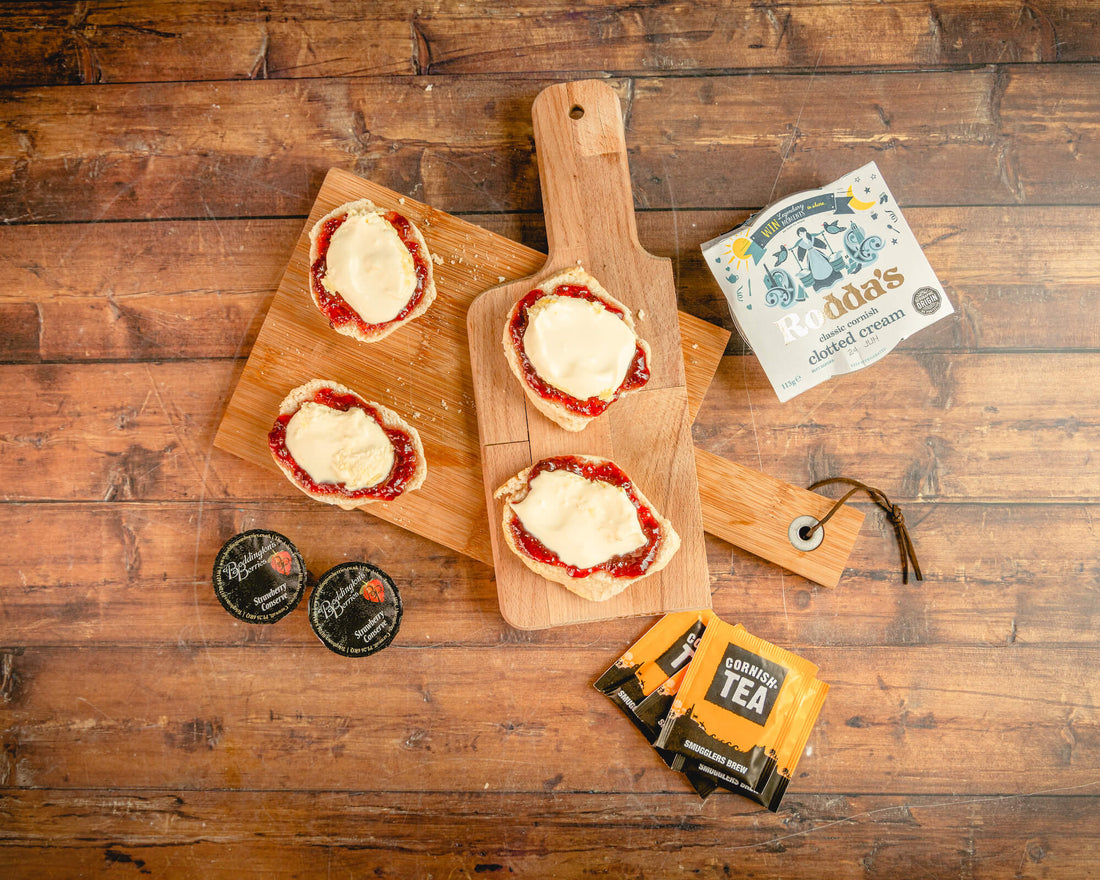
A Cornish cream tea is a light afternoon treat of scones, strawberry jam and Cornish clotted cream, served with a pot of tea. It is simpler than a full afternoon tea, which usually adds sandwiches and cakes. The thing that makes it Cornish is the order: in Cornwall, the jam goes on first and the clotted cream goes on top.
If you want to try one without travelling, our Cornish cream teas by post include everything you need, from a cream tea for two to a cream tea for four.
A short history of the cream tea
Clotted cream has been made in the South West of England for centuries, using the rich milk from the region's dairy farms. Pairing it with bread or scones and fruit preserves became a popular treat across Cornwall and Devon, and in the 19th and 20th centuries the cream tea grew into a tearoom favourite as visitors flocked to the coast by train.
Today the cream tea is one of the best-known foods of the South West, alongside the Cornish pasty. You can read more in our post on the history of Cornish cream teas.
Jam first or cream first?
This is the great debate. In Cornwall, you split the scone, spread the jam, then top it with clotted cream. In Devon, the cream goes on first, like butter, with the jam on top. Both sides feel very strongly about it.
The Cornish argument is simple: clotted cream is the star, so it belongs on top where you can see it. For the full story, read Devon vs Cornwall: jam or cream first?
The three things that make a proper cream tea
1. The scone
A good scone is light, soft and slightly crumbly, golden on top and split easily by hand. Plain scones are the classic, but fruit, cheese and chocolate scones all have their fans. Traditionally, some Cornish cream teas were served on a "Cornish split", a soft, slightly sweet bread bun, though scones are by far the most common today.
2. Cornish clotted cream
Clotted cream is made by gently heating full-cream milk and letting it cool slowly, so the cream rises and forms a thick, golden crust. The result is rich and spoonable, much thicker than whipped or double cream. Cornish clotted cream has protected status, which means it has to be made in Cornwall from Cornish milk to carry the name.
Our hampers use Rodda's Cornish clotted cream, made in Cornwall since 1890.
3. The jam
Strawberry jam is the traditional choice, sweet and fruity enough to cut through the richness of the cream. Raspberry and cherry are popular alternatives. We use Boddingtons jam, made in Mevagissey; you can read about them in who supplies our jam.
How to serve a Cornish cream tea
- Brew the tea first. A strong black tea is traditional. We include Cornish tea in our hampers; read more about it in our Cornish tea story.
- Split the scone in half by hand rather than cutting it.
- Spread the jam on each half.
- Top with clotted cream, as much as you like.
- Eat each half on its own, rather than putting the scone back together like a sandwich.
One small pot of clotted cream will usually cover two to four scones, depending on how generous you are.
Storing clotted cream and scones
- Keep clotted cream in the fridge and use it by the date on the pot.
- Keep scones in their packaging or an airtight container so they stay soft.
- If your cream tea arrives as a gift, pop the cream in the fridge as soon as it arrives.
Cream tea vs afternoon tea
People often use the two names for the same thing, but they are different. A cream tea is just scones, jam, clotted cream and tea. An afternoon tea is a bigger spread, usually with finger sandwiches, cakes and scones served on a tiered stand. A cream tea is the quicker, simpler treat, and the one Cornwall is famous for.
Where to have a cream tea in Cornwall
Cornwall is full of tearooms, gardens and clifftop cafés serving cream teas, from fishing villages to stately homes. If you are planning a visit, see our guide to the best places for a cream tea in Cornwall.
Cornish cream teas by post
Can't get to Cornwall? We send proper Cornish cream teas across the UK. Each hamper is packed by our family business in Cornwall with scones, Rodda's clotted cream, strawberry jam and Cornish tea, with free tracked delivery and a free gift message.
- Cornish Cream Tea for 2: a treat for two, or a thoughtful gift.
- Cornish Cream Tea for 4: for the family or a get-together.
- Pasty and cream tea hampers: a proper Cornish pasty with a cream tea.
- Christmas cream teas: Christmas tree scones and festive hampers, delivered on the day you choose.
Find out more in how our cream teas by post work, or browse all our Cornish cream teas.
Cornish cream tea questions
Is it jam or cream first in Cornwall?
Jam first, then clotted cream on top. Cream first is the Devon way.
What is the difference between clotted cream and double cream?
Clotted cream is much thicker and richer. It is made by slowly heating and cooling the cream so it forms a thick, golden crust, and it is spooned rather than poured.
What tea goes with a cream tea?
A strong black tea, such as a classic English breakfast style blend, is traditional, served with milk.
Can I send a Cornish cream tea as a gift?
Yes. Our cream tea hampers can be sent to any UK address with a free personal message, and you can choose the delivery day in the cart.